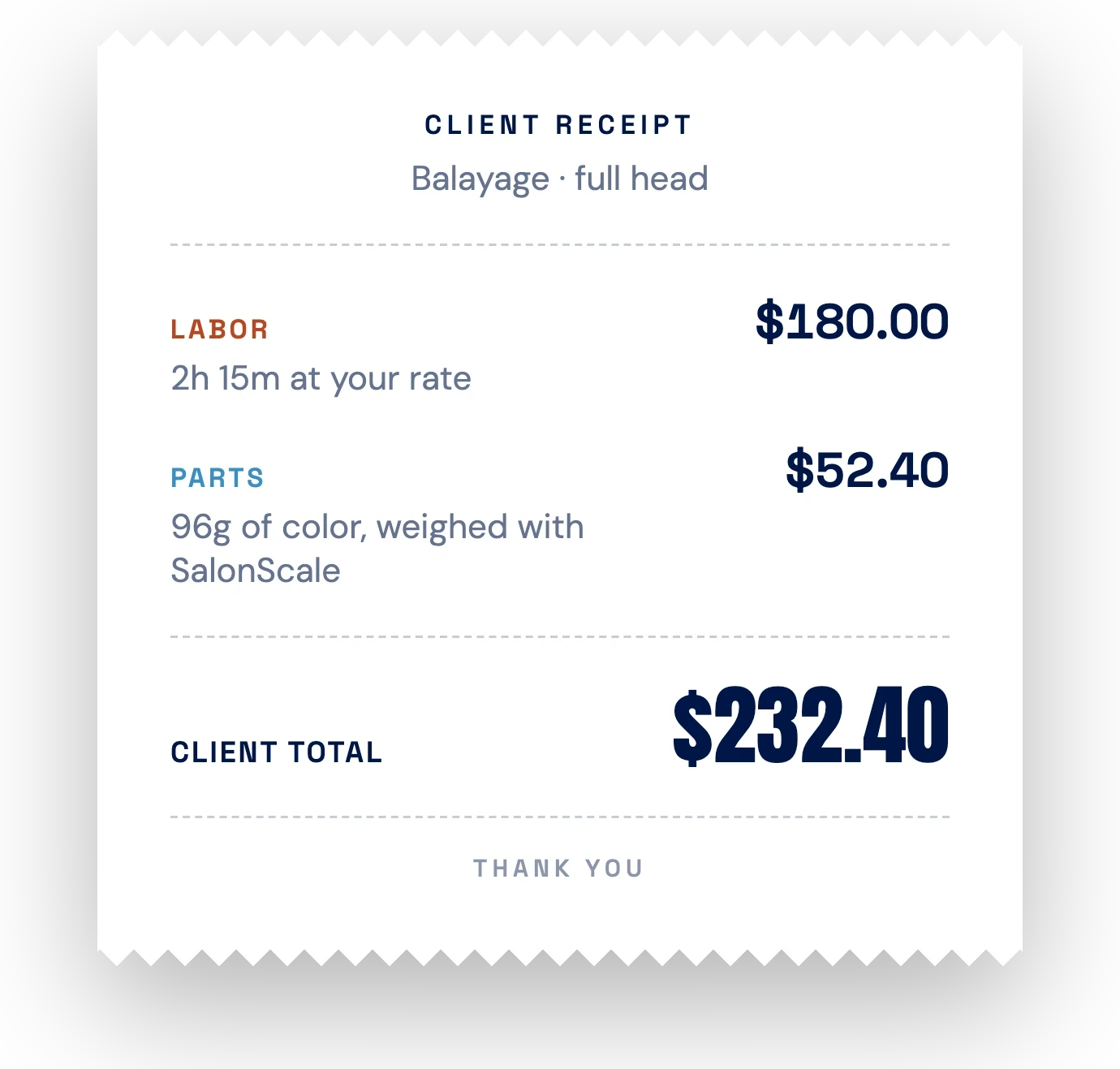
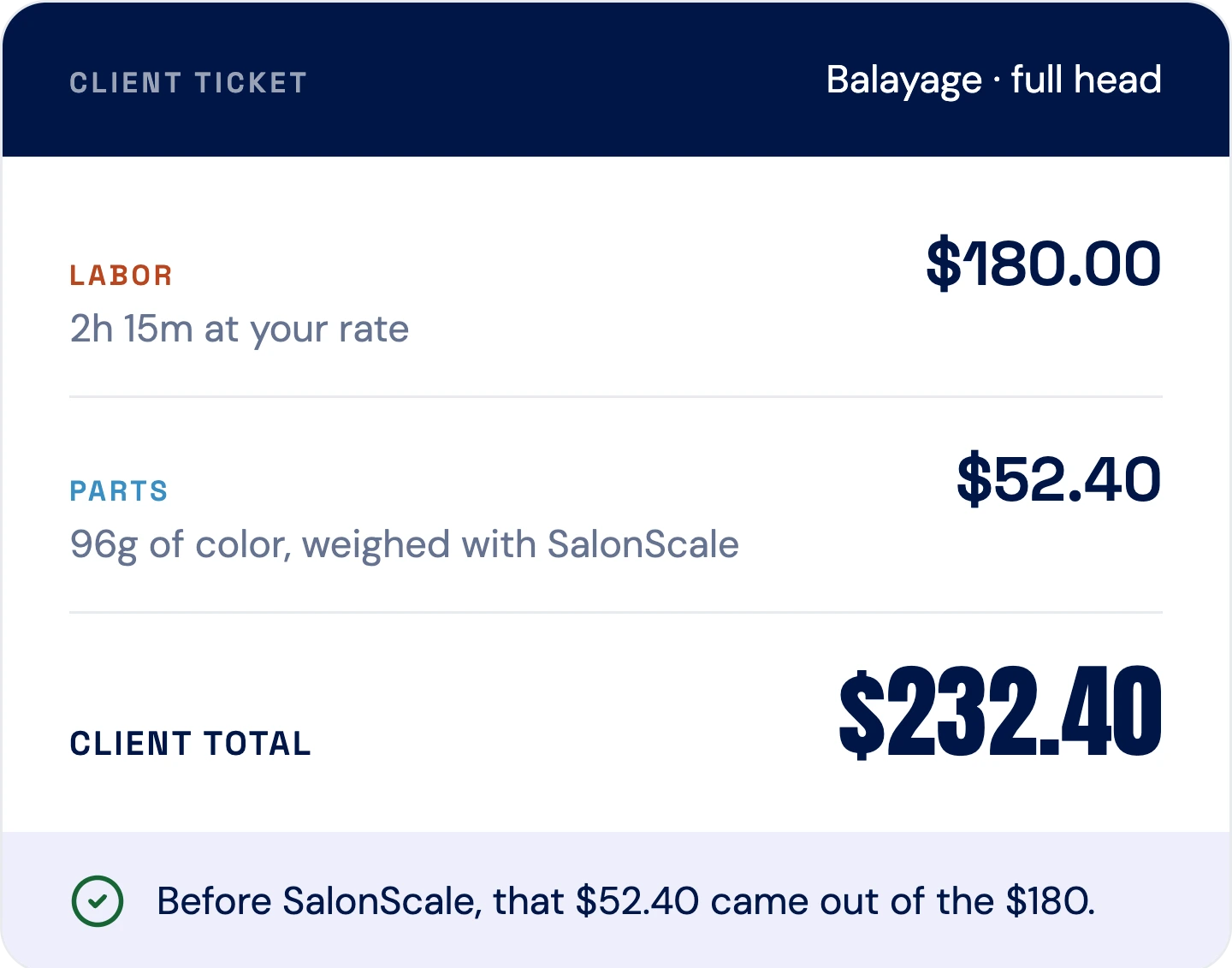
A mechanic bills for the part and for the hour. A salon bills for the hour and pours the part in for free. SalonScale separates the two: product gets measured and recovered, and your labor rate stands on its own.
Find your SalonScale plan

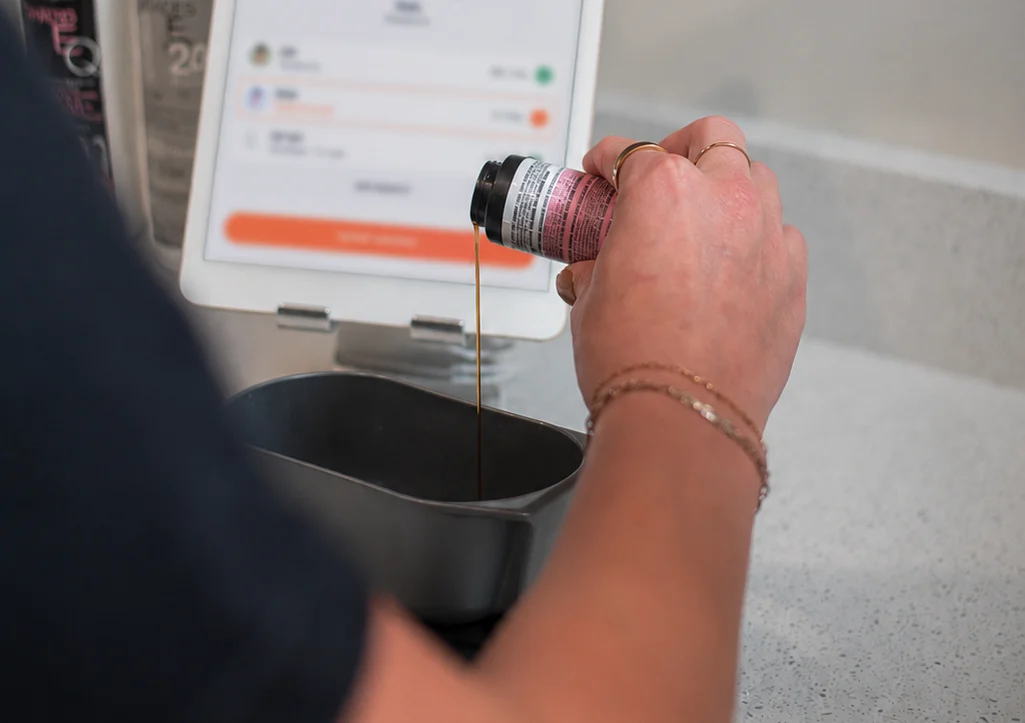
A part has a known cost, and the only way to know it is to weigh it. Your stylist weighs as they mix, by Bluetooth scale or typed grams, and the cost of the bowl adds up live. Nothing is estimated. Nothing is averaged. Nothing is absorbed.
“A balayage isn’t $40 of color. We weighed it. It’s $52.”

When product cost hides inside the service price, every increase looks like it’s about you. Split them and labor stays labor: commission is clean, a jump in color cost doesn’t quietly eat your rate, and a price change happens because your skill grew, not because your distributor raised a line.
“Raise your prices because your skill grew, not because color got expensive.”

Labor is your rate for the service. Parts is the product it actually took. On the ticket they sit apart, so the client sees what they paid for and you see what you kept. Every appointment you log sharpens the next quote, the next order, and the next price change.
“One ticket tells you what a service cost. A hundred tell you what your salon earns.”

One chair, one system, and a price you can finally defend.
SalonScale for Solos →Salon teamsStandardize the floor without micromanaging a single stylist.
SalonScale for Teams →Rental & hybrid salonsTurn the color you supply to renters into recurring product revenue.
SalonScale for Rentals & Hybrids →Most salons introduce it as a charge based on what the service used, so a short root touch-up costs less than a full head of blonde. Clients read that as fair, because it is.
Weighing is the same motion they already make. The bowl goes on the scale instead of the counter, and the cost is done by the time the bowl is.
You can keep it. The method just tells you whether the flat fee covers the parts, which is usually the first surprise.
No. Charge by the hour or keep your standard service prices, whichever suits you. Your time is predictable; the color cost is the part that changes from client to client and quietly eats your margin. Parts and labor covers it by adding the product to the service price, which is how most salons do it.
Parts and labor applies to anything you mix or apply by weight. Color is where the money hides, so it is where salons start.
From the very first appointment. The first service you charge as parts and labor is the first one where the color pays for itself, and every appointment after that does the same.
Book a demo and see the method running on your own numbers.